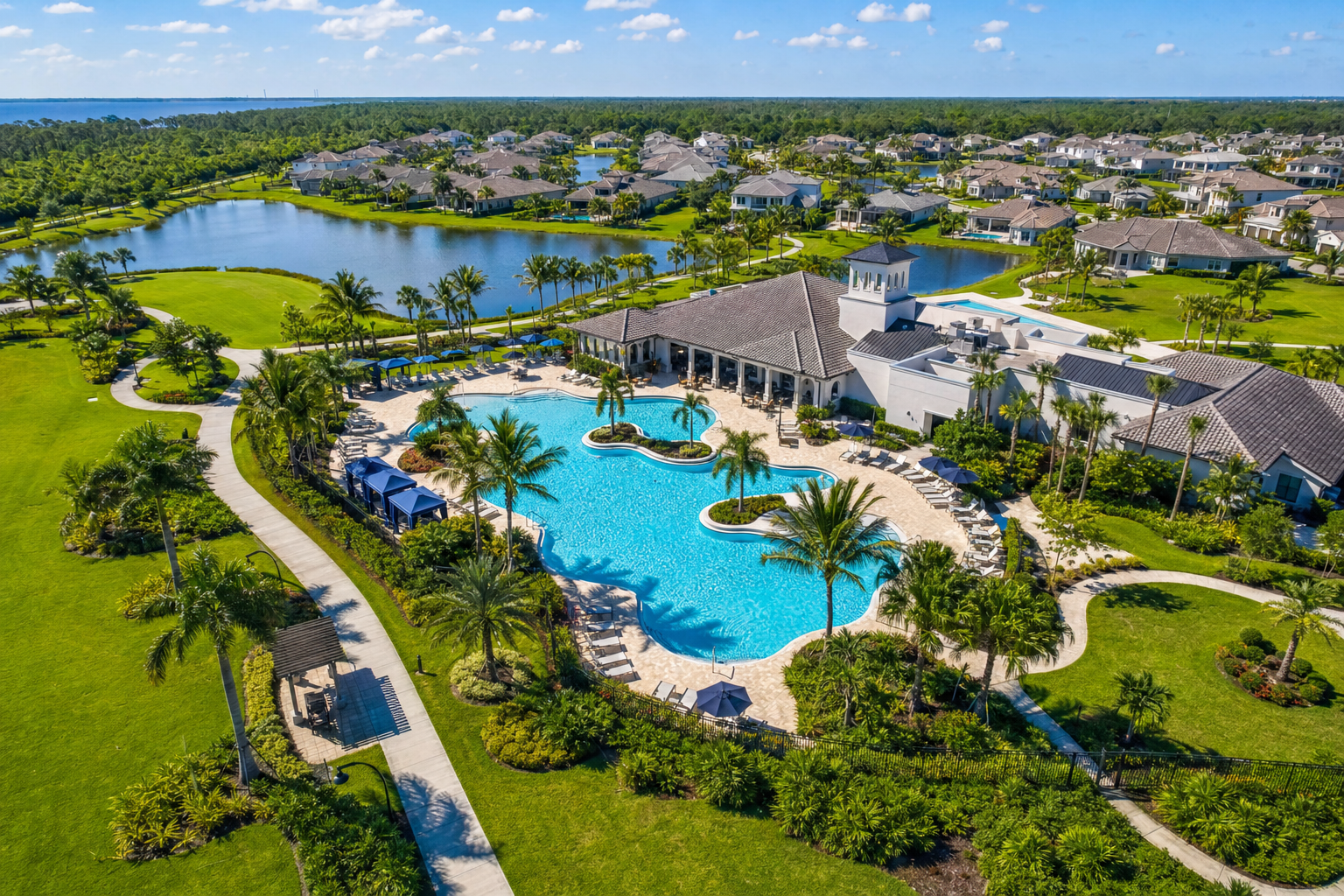
A Community Development District (CDD) is a special-purpose government created under Florida Statute Chapter 190. When a developer builds a large master-planned community, they can petition the state to create a CDD. The CDD then issues tax-exempt municipal bonds to pay for the infrastructure — roads, water and sewer lines, streetlights, drainage, community pools, clubhouses, gates, and landscaping. Homeowners in that community pay off the bonds through annual assessments.
The two parts of your CDD assessment
Every CDD fee has two distinct components, and they behave very differently:
1. Bond / Debt Assessment
Pays off the infrastructure bonds the developer issued. This portion has an end date. It's typically the larger portion for the first two decades of a community. Once the bonds are paid off, this piece disappears from your tax bill forever.
2. Operations & Maintenance (O&M)
Funds ongoing costs — pond and lake maintenance, common-area landscaping, streetlight electricity, gate and clubhouse upkeep, administration. This part never ends and typically increases each year with the district's budget.
How CDD fees are paid
You do not get a separate CDD bill. The total annual CDD assessment (bond + O&M) appears as a non-ad valorem assessment on your annual county property tax bill, collected by the county tax collector along with your regular property taxes. If you escrow your taxes through your mortgage, your monthly mortgage payment already includes it. See the financing chapter for how this affects your DTI.
Florida law requires real estate agents to disclose CDDs in the MLS. You'll see a "yes/no" flag and often the annual amount. To verify: pull the property's current tax bill from the county tax collector's website and look for the "non-ad valorem" section. It will list each CDD assessment separately.
Typical CDD fee ranges
| Community Type | Typical Annual CDD Total | Bond Portion | O&M Portion |
|---|---|---|---|
| Modest suburban CDD | $500 – $1,500 | $300 – $900 | $200 – $600 |
| Standard master-planned | $1,500 – $2,500 | $900 – $1,600 | $600 – $900 |
| Amenity-rich (pool, clubhouse, gate) | $2,500 – $4,000 | $1,500 – $2,500 | $1,000 – $1,500 |
| Luxury (golf, gate, resort amenities) | $4,000 – $8,000+ | $2,500 – $5,000 | $1,500 – $3,000+ |
Can you pay off the bond portion early?
Usually yes. Most CDDs allow homeowners to prepay their share of the outstanding bond principal in a lump sum. Once paid, that portion of your annual assessment goes away permanently. To pursue this:
- Contact the CDD's district manager or bond trustee
- Request a formal payoff letter (allow several business days)
- Compare the payoff amount to the remaining annual bond assessments — most people break even in 8 – 12 years
- Verify with your title company how the payoff is recorded and any lien releases needed
The O&M portion, of course, cannot be paid off. It's a perpetual assessment.
CDD vs. HOA — are they the same?
No. They can coexist in the same community:
- CDD = special-purpose government funding infrastructure and common areas. Board members are elected. Assessments appear on your tax bill. Governed by Florida law.
- HOA = private nonprofit corporation enforcing deed restrictions and architectural standards. Board is elected by homeowners. Dues billed directly. Governed by the community's Declaration of Covenants.
A home in a CDD community with an HOA pays both. Some communities only have one; some have both; some have neither. Always ask.
Due diligence checklist before you buy in a CDD
- Get the current and prior year's tax bills
- Request the district's current budget and assessment roll from the CDD manager
- Ask for any pending or planned special assessments (major amenity upgrades can add hundreds per year)
- Check bond disclosures on EMMA, the municipal bond repository — it shows the bond principal, payment schedule, and prepayment terms
- Confirm the CDD's boundaries with the property appraiser
- Ask your title company how CDDs are handled at settlement (typically the seller is credited for prepaid amounts)
- Ignoring the O&M portion. Buyers focus only on the bond because it "will end eventually" — but the O&M grows every year and never disappears.
- Not reading the assessment roll. Not all lots in a CDD pay the same amount. Corner lots, larger lots, and phase-2 lots often pay more.
- Comparing homes without normalizing for CDD. A $500K home with $3,500/year CDD costs the same monthly as a $540K home with no CDD. Always compare total monthly obligation.
Zoom out
CDDs are one piece of the true cost of homeownership in Florida. The other big ones are covered in the financing chapter (mortgage, taxes) and the insurance chapter (homeowners + flood).